


True Root Mapping for Clinical Clarity
IRS is designed to accurately map root and jaw structures through three core capabilities:
1. True Visualization of Root Jaw and Bone Morphology
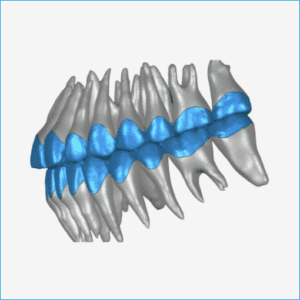
Pixel-level Root Identification
Efficiently identifies teeth and anatomical structures within CBCT scans for detailed visualization.
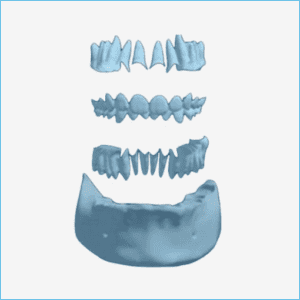
Crown-root Matching and Fusion
Precisely fuses intraoral scan crown data with CBCT root data, eliminating isolated datasets and presenting the tooth as a complete anatomical structure.
2. True Crown–Root Analysis for Informed Biomechanical Planning
IRS enables detailed analysis of crown and root relationships using CBCT-derived measurements, allowing orthodontists to evaluate crown length, root length, root orientation, and their relationship within the alveolar bone. By integrating this data into treatment planning, clinicians can assess crown–root ratios (CRR), root positioning, and anatomical constraints that directly influence force selection and movement strategy.
This level of analysis supports more informed biomechanical decision-making, particularly in extraction cases, compromised periodontal conditions, or scenarios involving complex tooth movement. By accounting for root anatomy and bone support alongside crown position, IRS helps orthodontists plan movements with greater confidence, stability awareness, and long-term treatment considerations in mind.
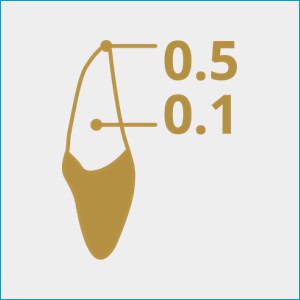
Real Crown and Root Data Analysis
Provide complete crown and root data for accurate analysis of tooth movement.

Real Design Modification
This analysis allows orthodontists to accurately assess the health and stability of a patient’s teeth, especially in cases with compromised bone support.
3. Direct Root-Level Modification
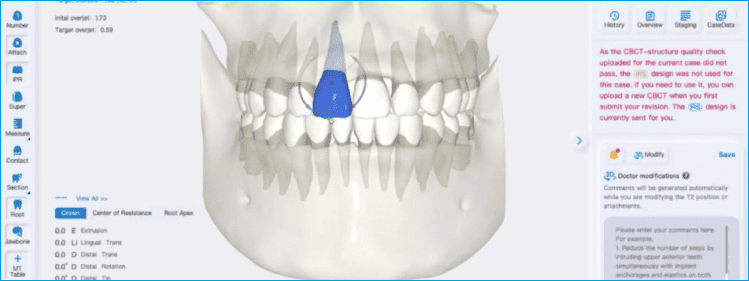
Through the 3D Tooth Adjustment tool within iOrtho™, IRS allows orthodontists to directly adjust planned root position, orientation, and root–alveolar relationships during digital treatment planning. Rather than relying solely on written comments or indirect modification requests, clinicians can actively refine root positioning within the 3D model, supporting more accurate expression of intended tooth movement and improved biomechanical control.
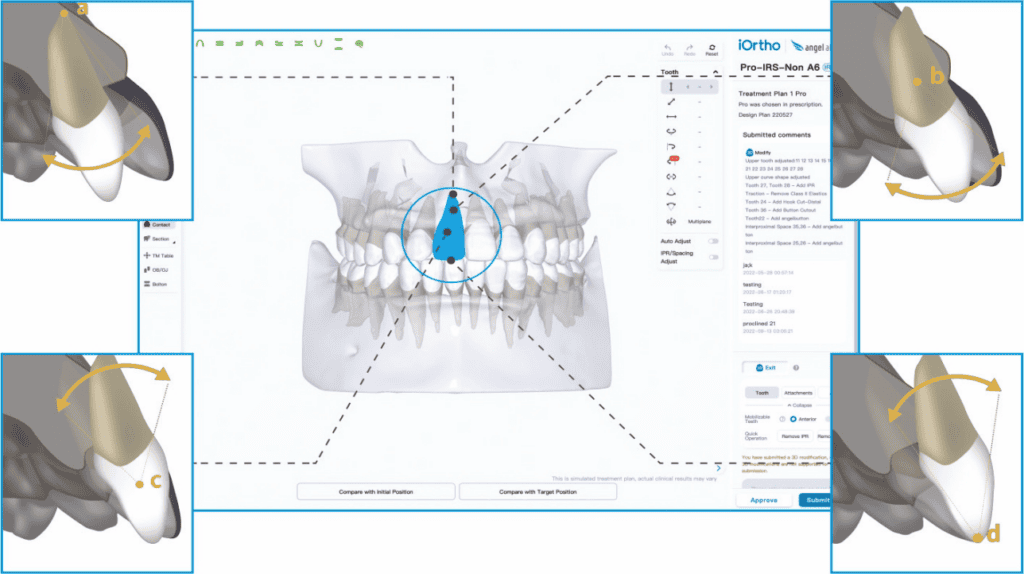
Controlled Tooth Movement with Four Adjustment Modes
IRS provides four defined control points to support precise planning of different tooth movement patterns:
Crown movement without root apex movement
Controlled tipping of the crown while maintaining root position.
Opposite crown and root movement (crown dominant)
Tipping movement with greater crown displacement than root movement.
Opposite crown and root movement (root dominant)
Movement emphasizing root repositioning with reduced crown displacement.
Root movement without incisal crown movement
Targeted root control while maintaining crown position.
Featured Clinical Case with IRS
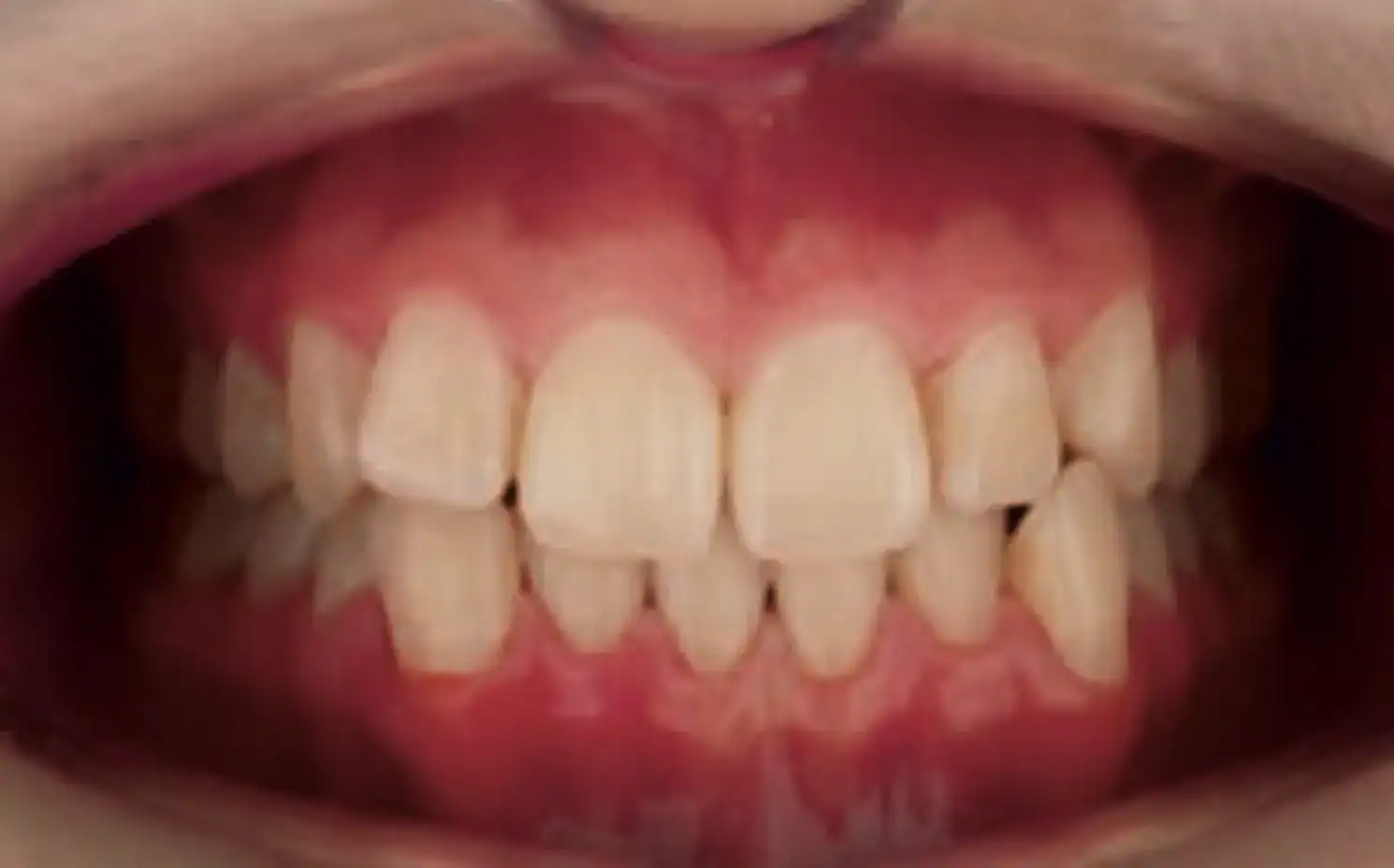
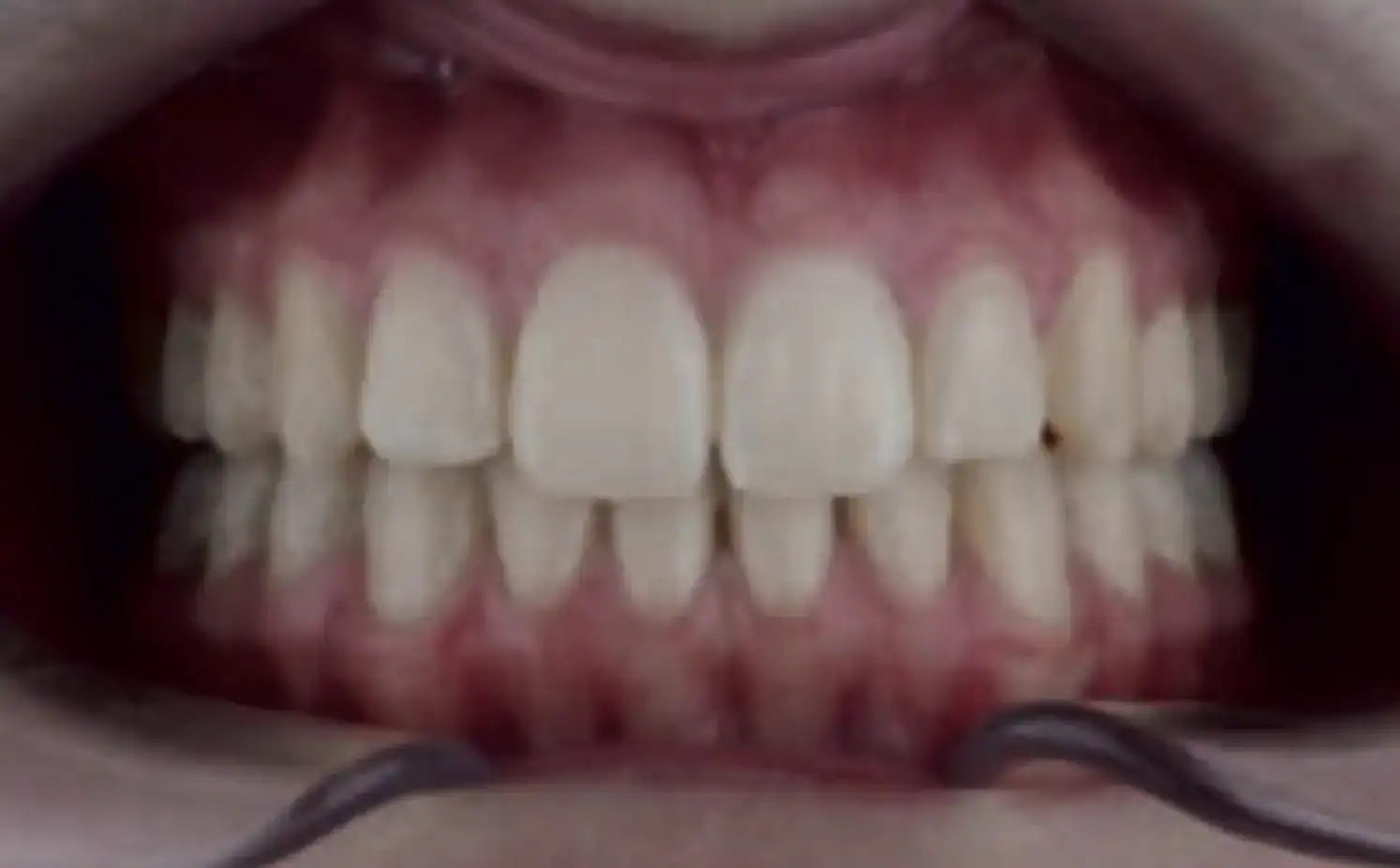
Angel Aligner PRO: Correction of a class III malocclusion with lower molar distalization
By Dr. David González Zamora
Dr. David González Zamora successfully treated a 19-year-old female patient with skeletal and dental Class III malocclusion using Angel Aligner Pro. The 13-month treatment involved lower molar distalization, crossbite correction, and root alignment of lower canines—completed in 39 aligners with no refinements. The dual-material “7+3” system ensured precise control and efficient results.

Live Events, Webinars and Videos
Empowering orthodontists through expert-led webinars, live events, and on-demand MicroTip videos. Angel Education helps you expand treatment capabilities, enhance patient outcomes, and grow your practice - anytime, anywhere.
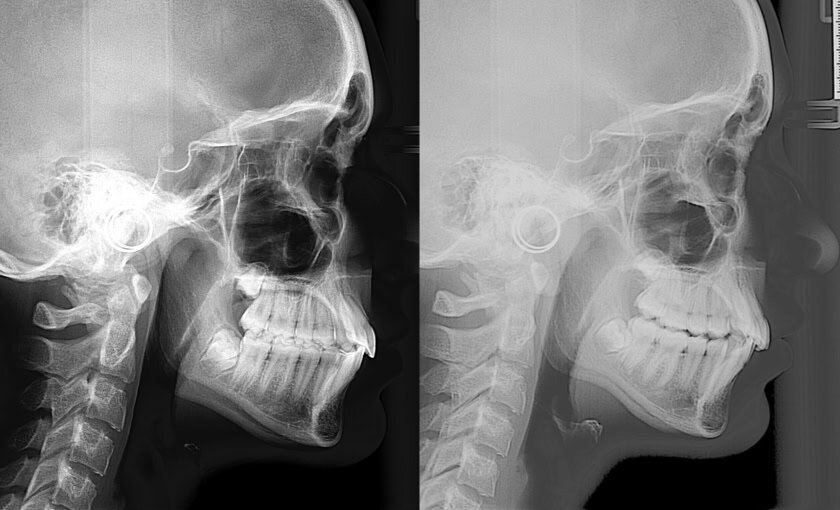
Clinical Cases - Proven Outcomes
Explore real-world Angel Aligner treatments for complex Class II and Class III malocclusions, including molar distalization, crossbite correction, and crowding resolution. See how our innovations deliver precise tooth movement, improved bite function, and enhanced facial aesthetics.
Receive highlights and updates from Angel!

Learn more about Angel Aligner innovations - including product details, clinical protocols, innovative materials, workflow guidance, and intelligent features designed to enhance every treatment.



Featured Articles